
Fayette County Criminal Court Cases
The Iowa District Court for Fayette County is the trial court for felony and indictable-misdemeanor prosecutions. Fayette County sits in Judicial District 1A. Iowa uses a unified District Court, so searchers should not expect a separate county-court system like those found in some other states. A local officer may start a matter with a citation or arrest, but a filed state criminal case moves into the Iowa Judicial Branch.
The Fayette County Clerk of Court keeps the docket and filed case documents. That office is the right custodian for a complaint or trial information, hearing history, orders, judgment, sentence, and certified copy. The official courthouse contact page supplies the county building route. A city police department or the sheriff keeps its own incident report. Those agency files describe the alleged event but do not replace the court outcome.
The official Fayette County Clerk of Court page shows the local route into the state court system. The image below reflects that clerk-focused access point.
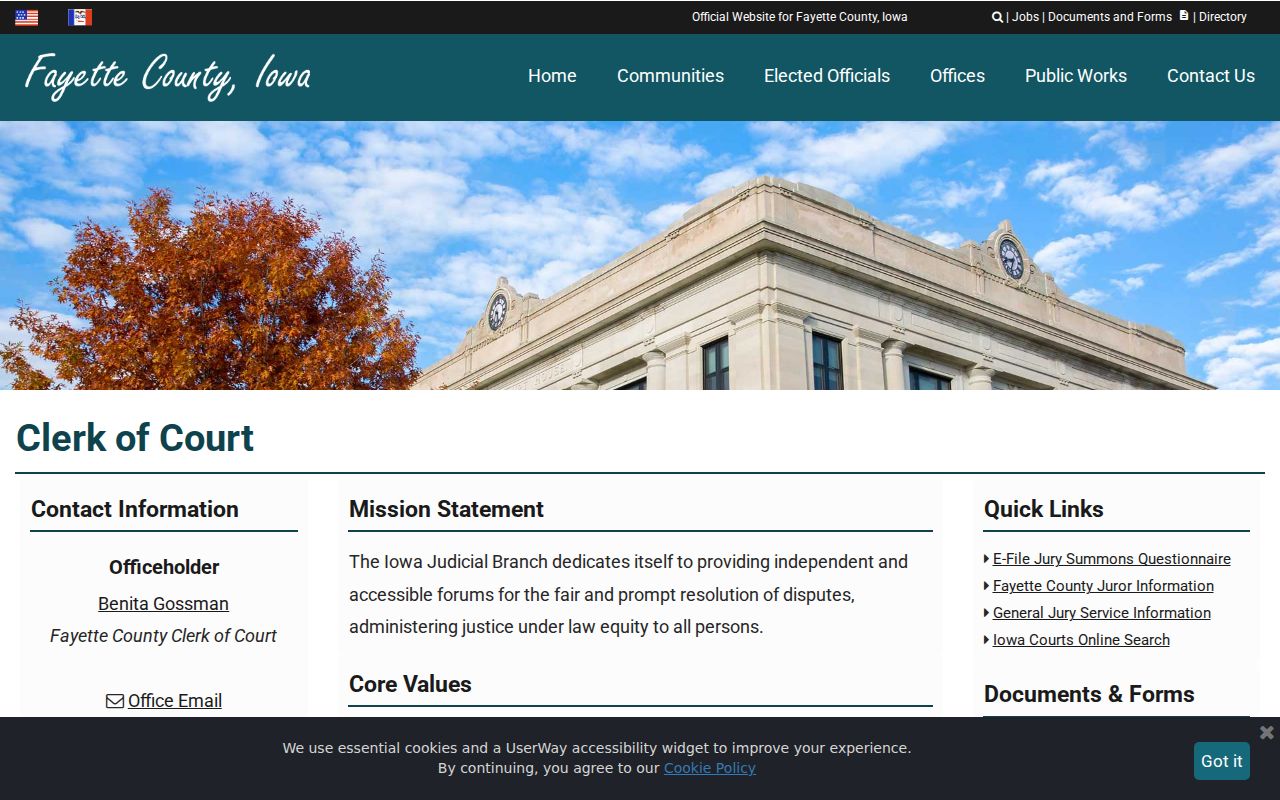
Use the clerk when a docket entry needs a certified source document or when a Fayette County case cannot be resolved from the public index alone.
Fayette County Felony Court
The filed charge controls where the public case record lives. Felonies and indictable misdemeanors are handled by the Iowa District Court for Fayette County. Municipal ordinance and simple-misdemeanor matters may begin with local enforcement, but a state criminal filing still routes through the Judicial Branch. The clerk can confirm the precise venue when a city citation or ordinance label makes the path unclear.
This distinction prevents a common search error. Dispatch, jail intake, prosecution, and the court docket are linked steps, yet each office creates a different record. A booking charge is what jail staff received at intake. A trial information is a prosecutor's formal Iowa charging instrument. The judgment records the count the court finally resolved. All three descriptions can differ without any record being false. The sheriff's records instructions make the local boundary concrete by directing disposition questions back to the clerk.
Searching Fayette County Case Records
Iowa Courts Online Electronic Docket Record Search is the free first stop for Fayette County criminal case records. Search by a party name or a known case number, then narrow to Fayette County and the criminal case type when the controls allow it. Confirm a possible match through case context rather than a name alone.
- Open Iowa Courts Online and choose the public case-search path.
- Enter the party name or exact case number. Narrow the result to Fayette County and a criminal case type where available.
- Compare the case title, filing date, party role, and charge context before treating the result as a match.
- Read the docket events, charge sequence, status, disposition, sentence, and financial entries actually displayed.
- Call the Fayette County Clerk of Court at 563-422-5694 for an archived file, missing document, plain copy, or certified copy.
| Field Label | Type | Required | Notes |
|---|---|---|---|
| Party name | Text | One search key | Use spelling variants with care; a common name is not enough to confirm identity. |
| Case number | Text | One search key | The most precise route when the full number is known. |
| County | Selection | No | Choose Fayette to remove cases filed elsewhere in Iowa. |
| Case type | Selection | No | Use the criminal category when the current interface offers it. |
| Status and dates | Result fields | No | Use filing and event context to check the match and read progress. |
The state docket interface shown here is the assigned source for the statewide search.
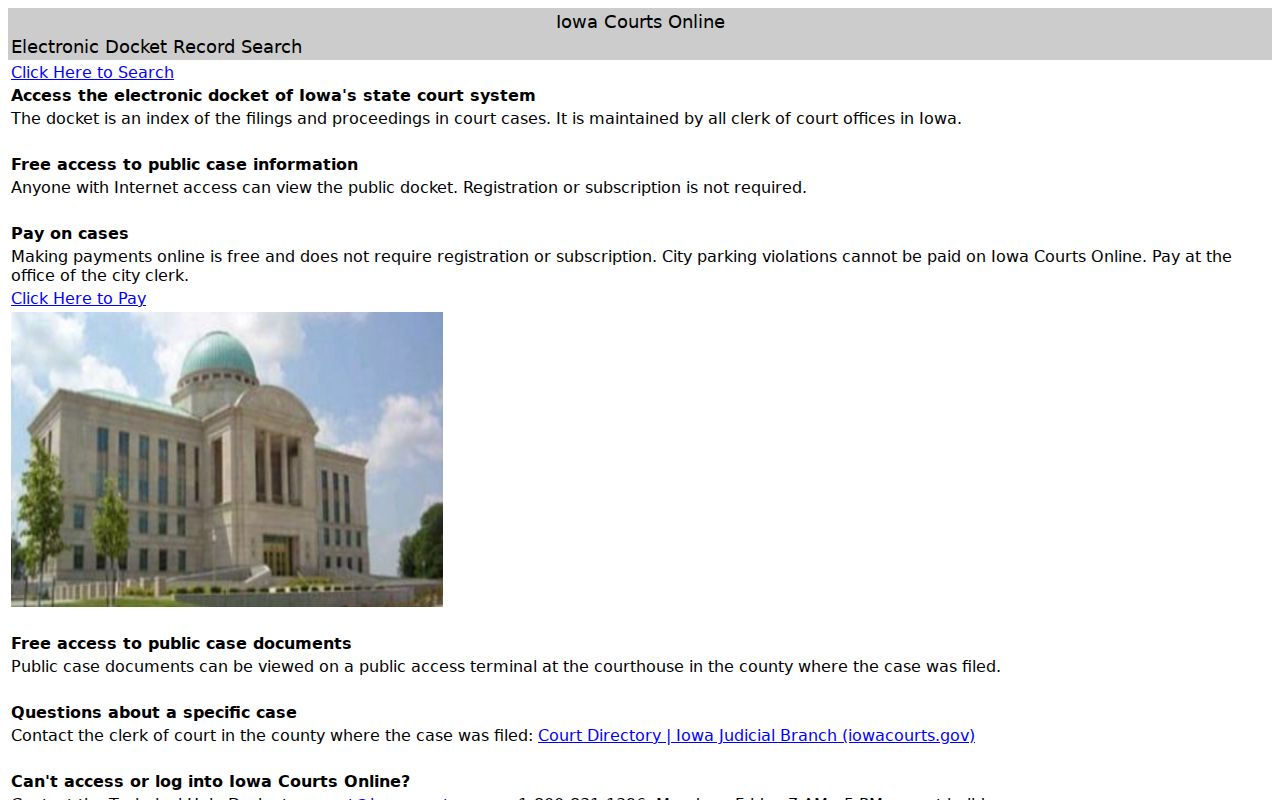
The online view is an index and docket route. It does not guarantee that each listed filing has a free document image.
Missing Fayette County Dispositions
A docket description may exist even when the underlying PDF does not. If a judgment, sentencing order, or older event is absent, note the Fayette County case number and call the clerk at 563-422-5694. Ask whether the record is public, whether a paper or archived file exists, and how to obtain a plain or certified copy. The research found no current official local copy fee, so verify cost with the clerk instead of relying on an old figure.
Also check that the search used the filed name and the right county. Court Rule chapter 16 requires protection of specified personal information in electronic filings. Redaction can explain why an online document is shorter than the courthouse file. Juvenile confidentiality or a sealing order may explain why no public case appears at all.
Note: A missing online image does not mean the Fayette County criminal case file or its public paper record does not exist.
Inside a Fayette County Case File
A Fayette County criminal case file gives the procedural context that a short repository response or booking entry lacks. Read it by charge sequence. The filed statute and level can change through amendment, dismissal, plea, or trial. The docket then links that charge to hearings, motions, orders, and the final judgment.
| Case header | Fayette County, case number, case title, type, status, and filing date. |
|---|---|
| Parties and counsel | Defendant role, State of Iowa as prosecuting party, and attorney details when publicly displayed. |
| Filed charges | Count sequence, description, Iowa Code section, level, and filing or offense date. |
| Docket events | Filed documents, hearings, pleas, motions, orders, judgment, and sentencing entries. |
| Disposition | The result for each count, which may differ from the arrest or first filed description. |
| Financial record | Public costs, fines, surcharges, payments, and balances when shown. |
| Document access | A docket label may require a separate clerk request for the actual filing or certified copy. |
Reading Fayette County Docket Terms
A few Iowa terms make Fayette County criminal court cases easier to follow. “Trial information” is a formal charging instrument used by an Iowa prosecutor in many felony cases. “Arraignment” is the stage when the filed charge is addressed and a plea is entered. “Disposition” means the result of a charge, not merely the status of the whole case.
- Deferred judgment
- The court withholds judgment while conditions are completed. A successful discharge is a nonconviction, though separate DCI retention rules still apply.
- Dismissal
- A charge ends without a conviction. Read each count because one charge may be dismissed while another is resolved.
- Acquittal
- A not-guilty determination after the court process.
- Pending
- The case or count remains unresolved. Pending does not mean convicted.
- Sentence
- The court-ordered consequence after a conviction, including any custody, supervision, financial, or other lawful terms shown.
Read the event dates in order. A plea setting is not itself a guilty plea, and an assessed balance should not be treated as the criminal outcome without the judgment entry.
How a Criminal Case Moves
A Fayette County prosecution can start with an arrest or citation. An initial appearance and bond review may follow. The prosecutor then evaluates the facts and may file a complaint, trial information, or seek an indictment. Arraignment, discovery, and motions lead toward a negotiated plea or trial. Judgment and sentencing come after the court resolves a count. An appeal or postconviction proceeding appears only when invoked.
Case flow: Charges Filed › Arraignment › Pretrial › Plea or Trial › Disposition › Sentencing
Do not overwrite one stage with another. The arresting officer's label records the start. The filed charge records the prosecution's decision. The disposition records the court result. Readers who need the event before filing should use the county's arrest lookup channels, then return to the docket for the outcome.
Federal Fayette County Cases
Iowa Courts Online does not include federal prosecutions. Fayette County lies in the Northern District of Iowa, and its federal dockets are searched through PACER. A county jail entry may show a U.S. Marshals or other federal hold because the Fayette County Correctional Center can accept federal prisoners. That custody label is not the full federal case.
The official Northern District source appears below and identifies the federal court that covers Fayette County.
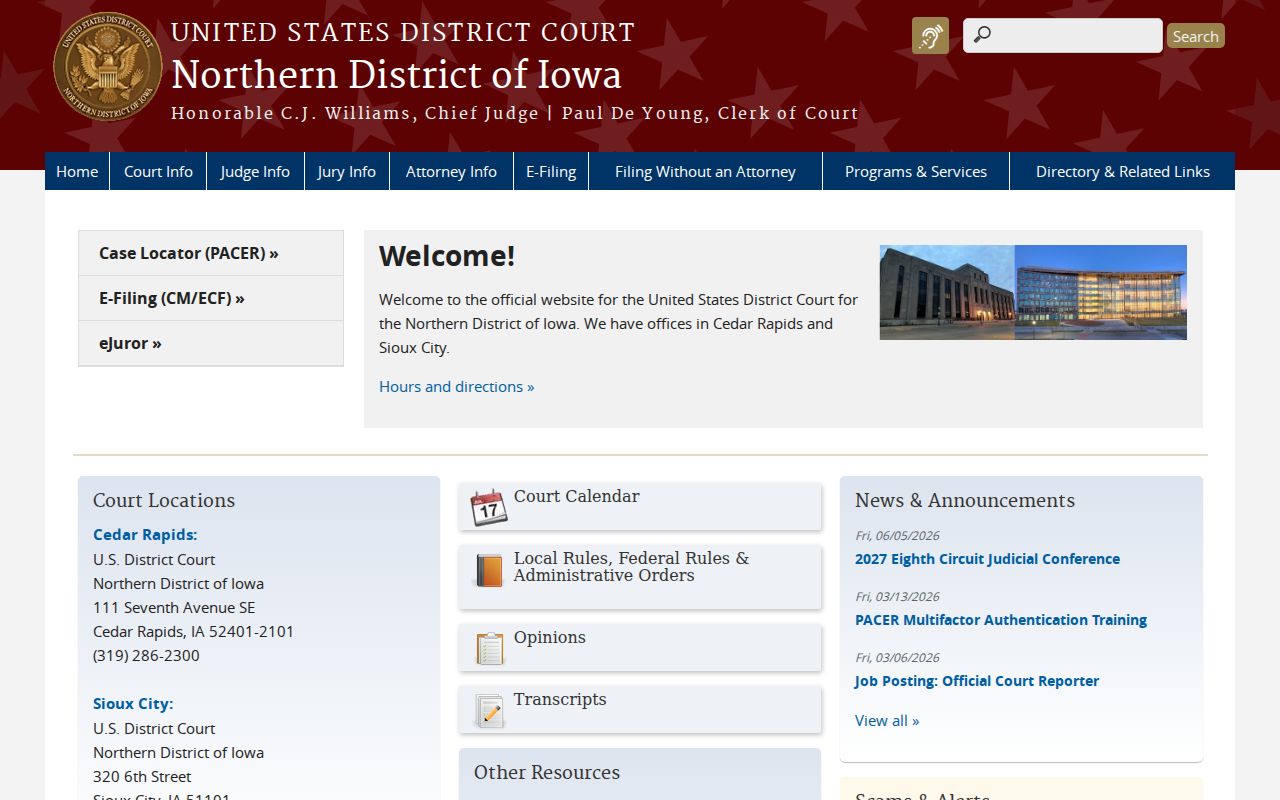
Use the federal district and PACER for charges and docket events, not the state portal or a jail hold description.
The official PACER site shown here is the electronic federal-record access route.
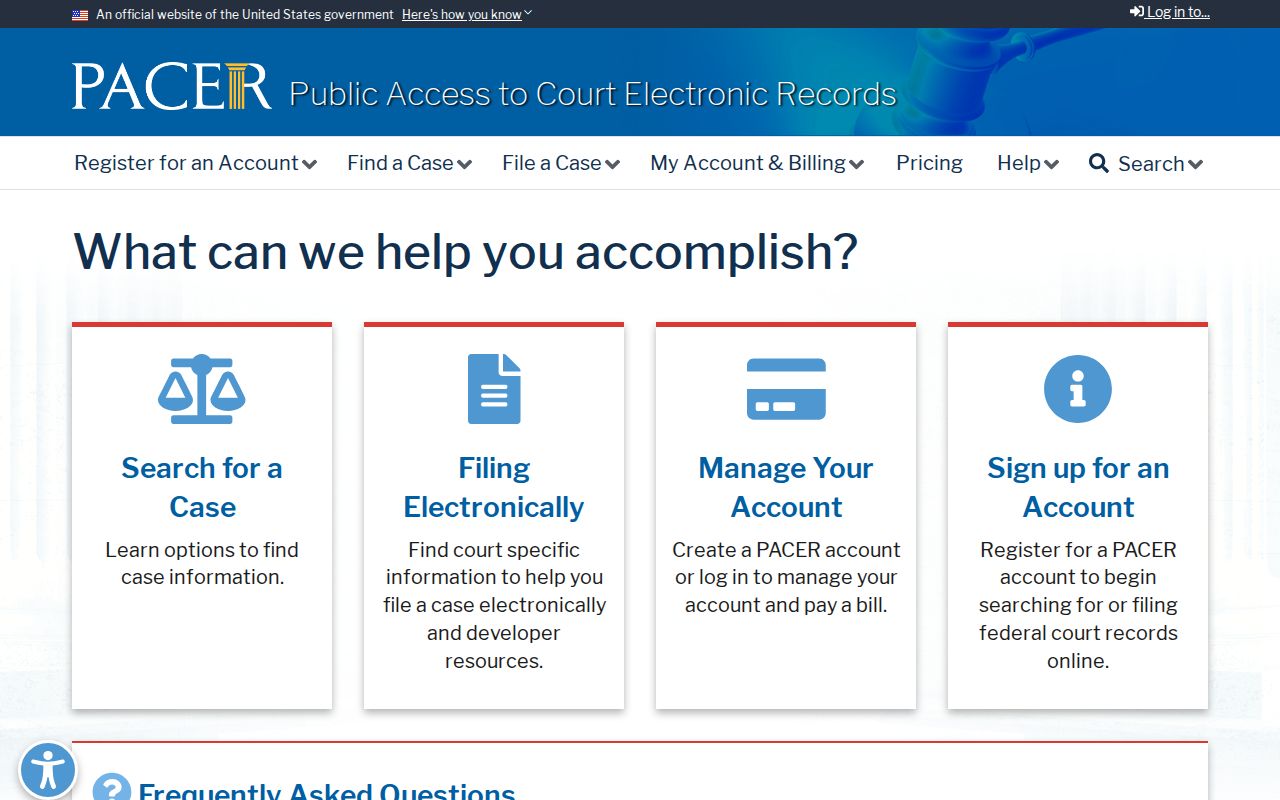
PACER requires registration and generally charges under its current federal fee schedule, so verify the live terms before retrieving documents.
Fayette County Federal Custody Clues
A federal docket and a federal custody record answer different questions. PACER shows filed court activity. The Federal Bureau of Prisons locator shows federal custody or release information in its system. Neither substitutes for a Fayette County state docket. If the local roster says “federal charge” or “hold for other agency,” use that note only as a routing clue.
The Federal Bureau of Prisons locator pictured below is the official federal custody source assigned to this page.
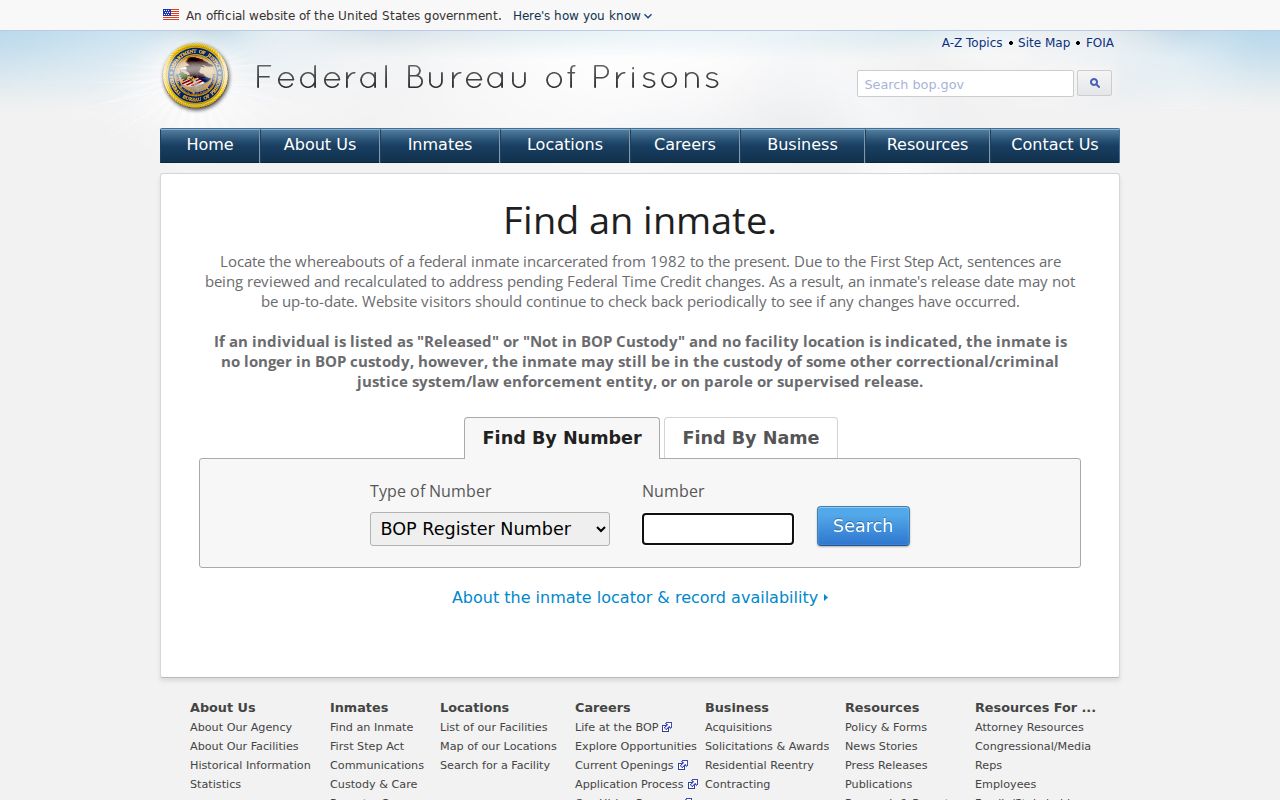
A locator match may help explain custody, but the Northern District docket remains the place to read a federal prosecution and its disposition.
Case Record Access & Restrictions
Iowa Code chapter 22 supports inspection and copying of nonconfidential government records, but court access also reflects judicial rules and laws that protect certain content. Iowa Code section 232.147 makes most juvenile court records confidential, subject to statutory exceptions. Court Rule chapter 16 protects specified personal information in electronic filings.
A public docket can therefore omit protected identifiers, confidential documents, and sealed material. The right response is to ask the clerk about access status, not to infer guilt, innocence, or the absence of a case from one blank screen. Iowa Code chapter 901C can also remove qualifying dismissed or not-guilty matters from ordinary public access after legal requirements are met.
Access pointer: Ask for the Fayette County case by number and request the public, redacted portion. The clerk can explain copy procedure but cannot give legal advice.